Fritillaria
By Bob Nold

Fritillaria is a genus of over one hundred species distributed throughout the Northern Hemisphere. Common name, fritillary. If you are totally cool like me you call them “frits”.
The generic name comes from the Latin word for “dice box”, a box that, I guess, held dice. This may seem like an odd name until you look at the snakeshead fritillary (Fritillaria meleagris) with its checkered patterns on the outside of the flower.
Let’s start with that one, since it’s easy to find. It’s easy to grow in a location where the soil does not dry out much. In fact, a wet meadow would be ideal. I’ve lost some of mine over the years due to excessive dryness. The typical color is a sort of dusky purple, on a plant about a foot tall; there’s also a beautiful white, and several named varieties which you can get from specialist nurseries.
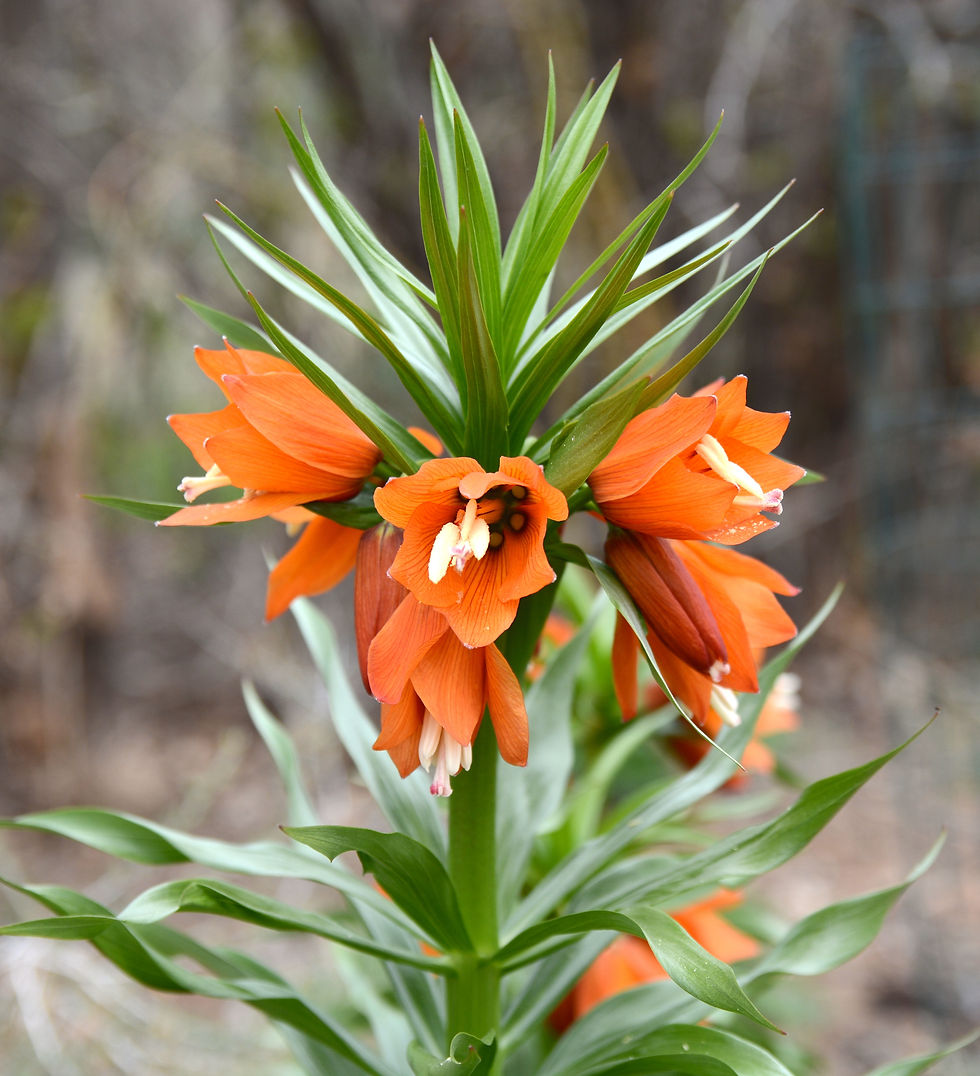
The other one that’s easy to find is Fritillaria imperialis, a large one to almost two feet tall, called the “crown imperial” for some reason, even though it looks like other species which are not called that. Some people claim that it’s hard to grow, but if you stay with me here I’ll tell you why. Maybe the same people say it’s unpleasant to grow because of the strong smell, but to me the smell is like Spring itself. I can even smell them in the ground, a few weeks before they emerge. Being able to smell plants in the ground is about the ultimate in gardening, for me.
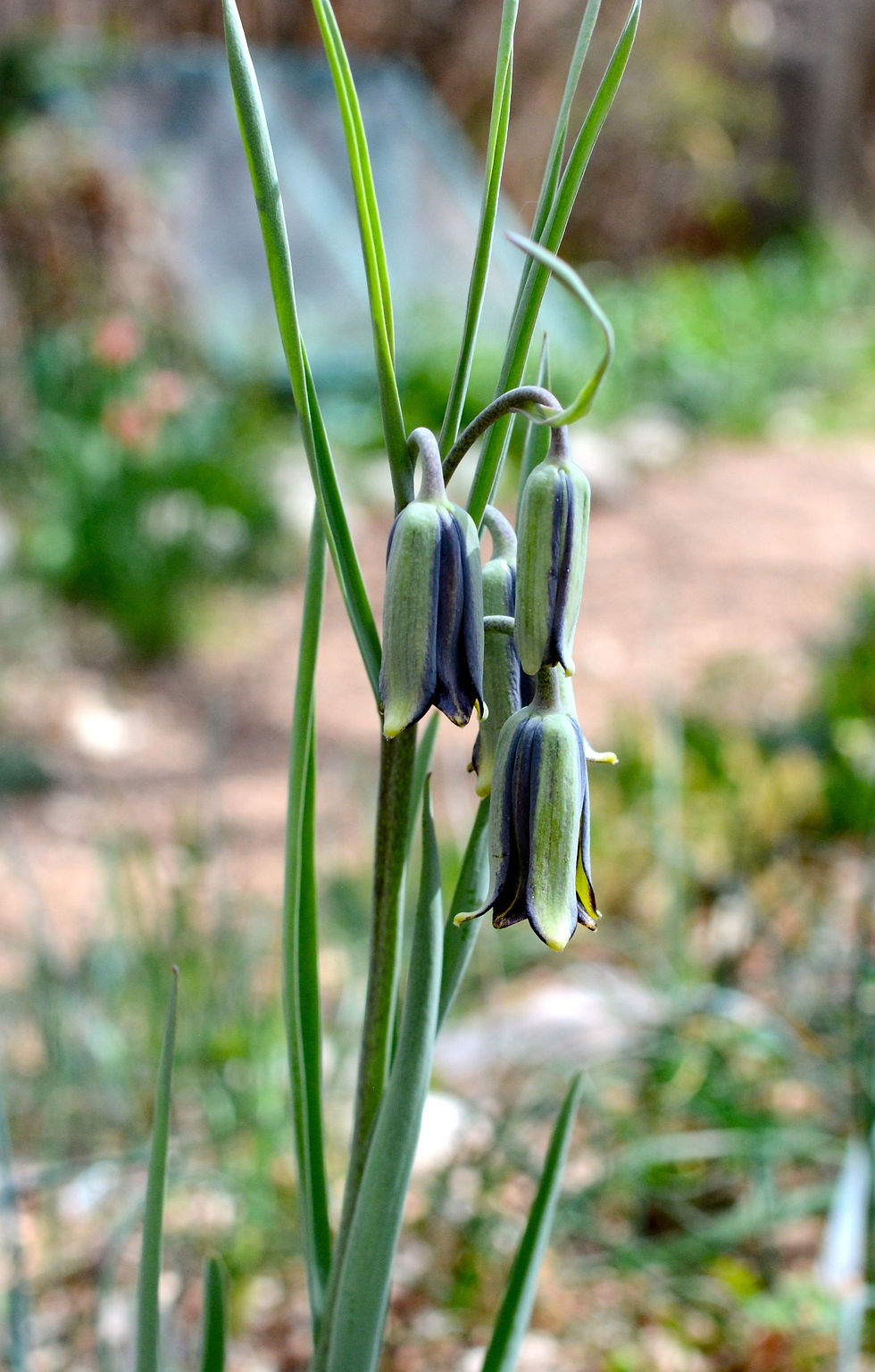
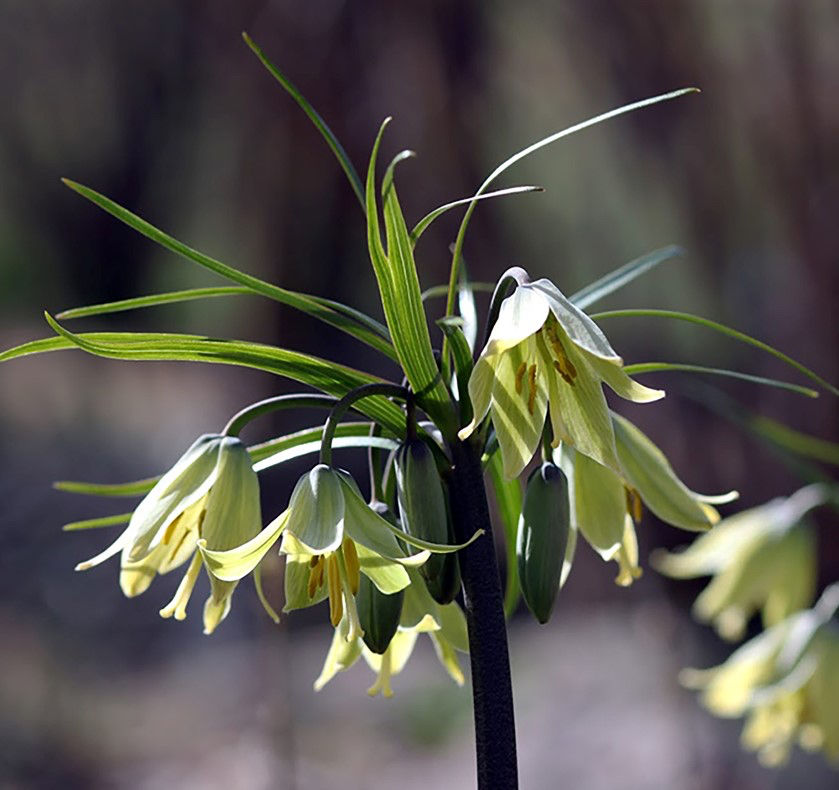
The other big ones, some of which are related to the crown imperial, are Fritillaria raddeana, with beautiful greenish flowers; F. eduardii, like imperialis but without the smell, F. persica, with dusky purple bells on a tallish stalk, and F. sewerzowii (se-vert-SOFF-ee-eye), with yellowish star-shaped flowers pointed more or less right at you. (Soviet-era botany put this last one in a separate genus, Korolkowia, but it’s sold as a fritillaria.)
If you look at pictures of these bulbs growing in their native habitats one thing stands out: the soil. If it looks suspiciously like the awful clay soil everyone around here hates, that’s because it is. The clay gets deeply wet when snow melts, and the bulbs emerge. At all other times of the year the bulbs are snugly insulated in the clay soil. Any summer rain that falls doesn’t penetrate deeply enough to affect the bulbs.
To a phenomenally lazy person such as myself, the idea of being successful with a minimum amount of effort, besides the initial digging, is very attractive. Any additional work would be too exhausting even to contemplate. For gardeners with soil other than clay, I suppose looking online for guidance would be best.
Other frits suitable for rock gardens, are Fritillaria michailovskyi, acmopetala, uva-vulpis, and so on. These are easily obtainable from bulb brokers and require no special treatment.
Fritillaria thunbergii, sometimes sold as F. verticillaris which it isn’t, is from Japan, also quite easy. It likes to be watered about once a week.
There are others from Japan and China which I haven’t grown. The one exception would be the large, beautiful Fritillaria pallidiflora, a medicinal plant in China, which I grew from seed ages ago and has now spread, by seed, into a fairly large colony. It grows happily in the most awful soil imaginable here, in partial shade.
Some other species from Central Asia, which are sometimes placed in a separate genus, Rhinopetalum, are highly desirable plants and excellent for dry gardens.. At least I imagine they’re excellent, since the most desirable ones are very difficult to find, expensive, and their cultivation is pretty much unknown territory. People who do grow these grow them in bulb or alpine houses, under protection from rain in winter and, especially, summer, so that sort of thing doesn’t translate very well into growing in our gardens here.
Well, there are two which you can find. Both are very beautiful, six inches or so tall, and not difficult to grow. Fritillaria bucharica is white, and F. stenanthera is pink. Again these do very well in ordinary clay soil if you’re not watering it.
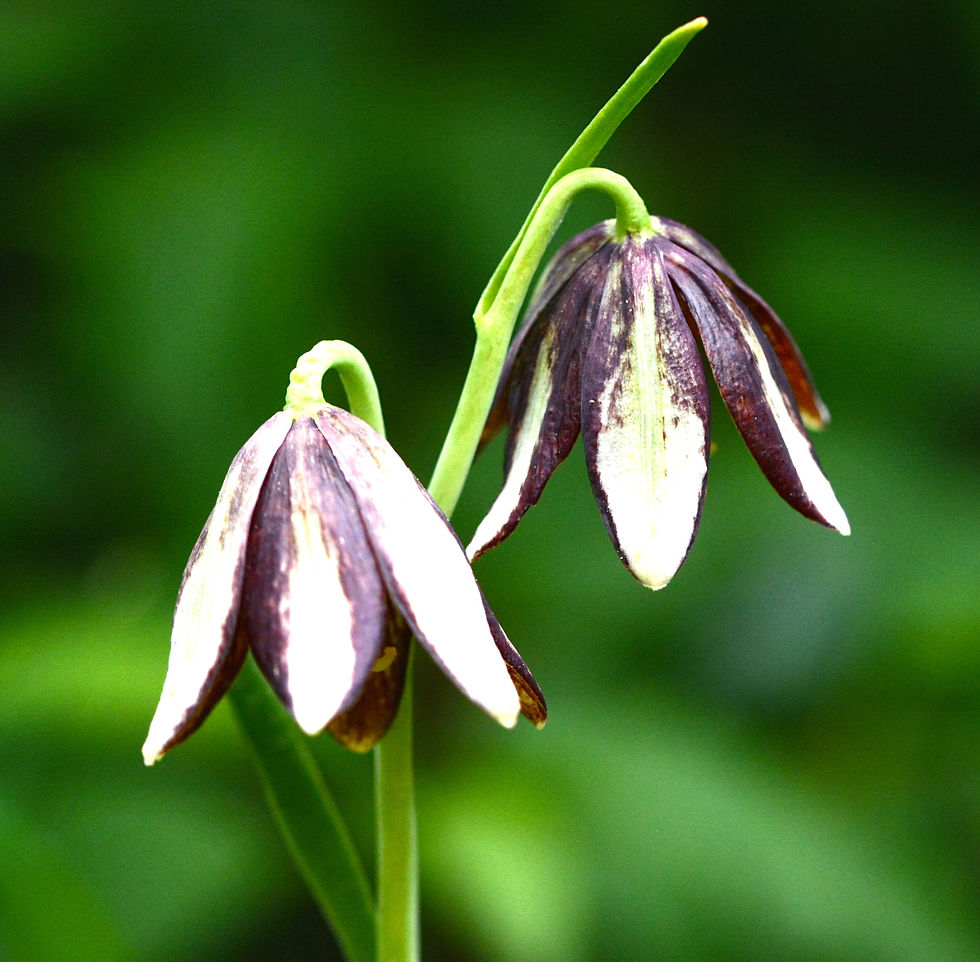
There are species native to western North America, too; many of the frits native to California are quite attractive, but also difficult to find in the trade (though Alplains sells seeds of many of these species). Sometimes these are sold with dire warnings about the necessity for dry soil in summer. I ignore those warnings; there’s no soil here that isn’t dry in the summer. I currently grow a cross between Fritillaria biflora and purdyi, and regular biflora. They do perfectly well here.
A couple of other things might be worth talking about. The first is money. Some of these bulbs are fairly expensive. Compared to the several million dollars I’ve spent on long-dead trees, shrubs, perennials, and so forth, the price of a bulb of Fritillaria eduardii is nothing. And it’s much more likely to come back, year after year, without having to drag hoses around.
The other thing is hardiness, and to me this whole subject is just plain weird. How bulbs that are under the ground during winter can have hardiness zone ratings is something I don’t understand. All the frits I’ve mentioned have been perfectly hardy for me. Every now and then a frost will catch Fritillaria raddeana and kill all the foliage. The bulbs come up blind the next year, but then flower as usual the year after.
What else? Oh, the bulbs come with a hole in the center which is the remains of last year’s flowering stalk. This goes up, when you plant it. You may think this is hilarious, but I, who plant zillions of bulbs every year, have planted some very expensive ones upside down. Some of the bulbs can be extremely small, and a magnifying glass can help. If it isn’t apparent which side had the flower stalk, look for vestiges of roots on one end. That will be the other end, the end that points down. Some say you should plant the bulb at an angle so water doesn’t lodge in the hole, but I haven’t found that necessary. Eight inches is a good enough planting depth.
Bob Nold is a renowned Colorado gardener and author who lives in Littleton and writes The Miserable Garden blog. His books, Penstemons, Columbines, and High and Dry, are out of print, but the first two are available as print-on-demand but without his late wife’s beautioful watercolors.