Gardening for Night Owls & Moths
Updated: Jun 2
By Marcia Tatroe:
Disappearing honeybees and butterflies get a lot of press but other, less glamorous, pollinators are also in trouble. Pesticide use, habitat degradation, light pollution and predatory European wasps are all taking a toll on moths.
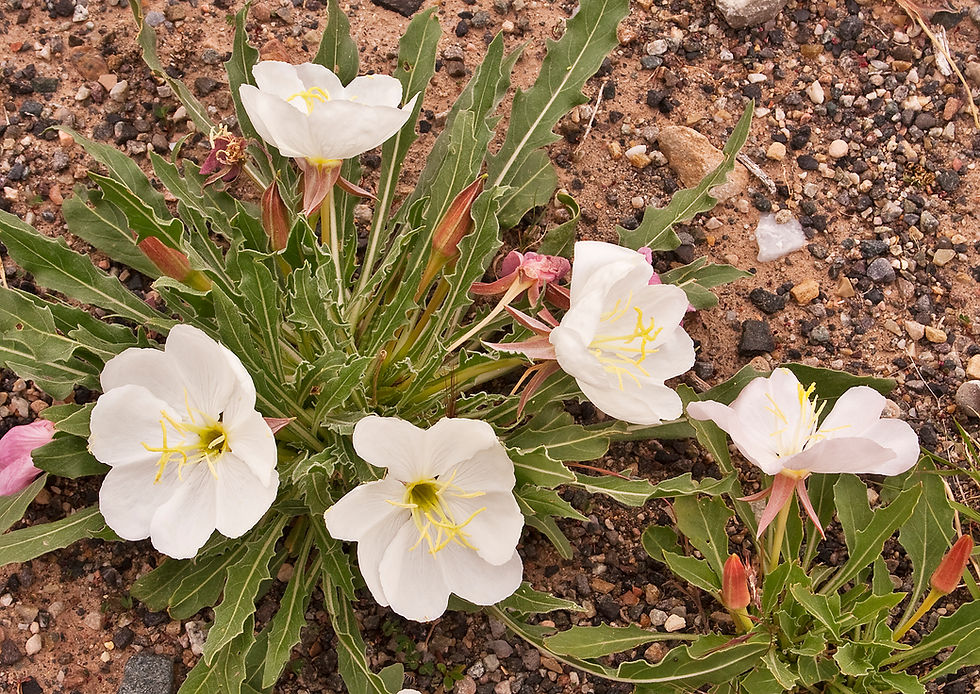
You might be thinking “good riddance.” After all, some of the worst garden pests belong to the moth tribe. But moths pollinate more flowers than do butterflies and are essential to the reproduction of many of our favorite wildflowers, especially those that bloom at night when butterflies and bees are not active—notably yuccas and evening primroses.

And however pesky, moths and their caterpillars are the main food that songbirds feed their young.
Moths can also be quite fascinating. I stopped killing tomato worms some years ago after discovering these are the young of hawk moths, hummingbird look-alikes that are almost impossible to distinguish from their avian counterparts when they come out at dusk.
Making it a policy to overlook caterpillar and moth damage in your garden would be a start toward conserving these pollinators. But you might consider doing more by joining the continuing efforts of wildlife gardeners and designing a habitat garden to invite moths to become part of a diverse and lively backyard ecosystem.
Because most moths are active at dawn and dusk or in the night, the flowers they rely on are night-bloomers. This is a handy trait for the gardener, who works 9 to 5, or who, like me, isn’t excited about going outside to admire the garden when daytime temperatures approach or exceed three digits.
Fortunately there is a garden tradition that takes advantage of the night and night owls. The Victorians were enthusiastic fans of the moon garden—not to provide flowers for moths but to extend the pleasures of the garden into the evening hours. A moon garden can do double duty, affording romance and a place for relaxation, quiet meditation, or to visit with friends all the while restoring habitat for endangered moths.

A moon garden doesn’t need to be large. Choose a bed next to a deck or patio and fill it with night blooming flowers. Comfy seating is essential. Whether a chaise lounge, table and chairs or a seating group, all benefit from cushy chair pads and pillows.
Soft lighting from string lights, torchieres, and patio lights illuminate dark, moonless nights. Shine low wattage spotlights up into trees or down to make a pool of light on the ground. Candles in lanterns, wall sconces, and chandeliers lend further ambience, as do fireplaces, chimeneas, and fire pits.
Nothing is more relaxing than the sound of splashing water from a fountain or water feature, however small. A table fountain is sufficient but a small pond can be sited to reflect the light of the moon and stars, and if you are lucky, attract frogs to sing in the night. Melodic wind chimes make music in the slightest breeze.
Whenever possible, choose light-colored and reflective materials for accessories and hardscape so that walls, walks, and artwork show up at night. For added glam set shiny glass gazing globes among the flowers.

White Delphinium 
Datura

Flowers pollinated by moths are generally white or pale-colored, large and showy, many featuring tubular corollas and sweet scents. Butterflies are attracted by flower color and shape, while moths must rely on scent. Look for flowers with “evening” in the name. Native evening stars Mentzelia decapetala and M. nuda open at twilight to take advantage of the last bees of the day and moths after dark. Evening primroses Oenothera ssp. sport satellite-dish flowers in white, pink, and pale yellow varying by species and cultivar.
Other nocturnal flowers that bloom exclusively at night include perennial desert four o’clock Mirabilis multiflora, the oxymoron night-blooming daylily Hemerocallis citrina, night-blooming water lilies and Datura ssp. Annuals like night phlox Zaluzianskya capensis, moonflower Ipomea alba and Peruvian four o’clock bloom only at night, as does the tropical shrub brugmansia and cactus night-blooming cereus.
This isn’t the place for flowers that close at night, such as Belamcanda, Callihroe or Delosperma, but whites and pastels that stay open day and night are good choices. Some of the best perennials are goatsbeard Aruncus dioicus, white Jupiter’s beard, sea kale, Delphinium cultivars, sand pink Dianthus arenarius, ‘White Swan’ coneflower, Gaura ‘So White’, August lily Hosta plantaginea, white forms of Siberian iris, Shasta daisies, Gallery White lupine, ‘David’ garden phlox, ‘Summer Snow’ obedient flower, Clematis ‘Guernsey Cream’ and hardy yuccas. Fragrant white trumpet and Casa Blanca Oriental lilies are another must have.

Annuals with flowers that remain open at night include white selections of begonias, impatiens, cosmos, spider flower, euphorbias, nicotiana, petunias and sweet alyssum.
To ensure your moon garden is moth-friendly, don’t use pesticides of any sort, plant densely, and add a few white-flowered shrubs. Cover the soil with an organic mulch of shredded bark or leaf litter and leave flower stalks standing uncut into winter to protect eggs, caterpillars and pupae.
What better entertainment than to turn off the TV, the computers, and the phone, and go outside to sit and enjoy the aromas and sounds of the evening with a night show provided by flowers and moths. If you’re patient you can actually watch datura and evening primrose flowers unfurl as the sun goes down. Beats reality TV any day of the week.
Marcia Tatroe’s garden in Centennial is a Gold level Audubon Habitat Hero garden.