Landscaping with Colorado Native Plants Conference: 2026
Updated: Apr 3
By Idelle Fisher:

I was fortunate to find an extra ticket to the 2026 Landscaping with Colorado Native Plants Conference in late February since it sold out a month early. It's great news for pollinators and wildlife that so many people are excited about planting more habitat in their landscapes. It was held at the CSU Spur campus which has planted native landscapes and gardens all along the riverfront open space. Free and open to the public year-round, CSU Spur has courses for adults, student field trips, family activities and event spaces.

The Land is Not Wild
Dr. Rosalyn LaPier, a Native American traditionally trained ethnobotanist, writer, professor and environmental historian, talked about the human relationship with plants. Indigenous people like the Blackfeet had intensive knowledge of plants and have adapted and shaped the landscapes around us over time. They created food and useful oases along their seasonal travel routes, transplanting Serviceberries, managing known patches of Prairie Turnips (Pediomelum esculentum) which were a vital root vegetable used for food and easily preserved, and tending grasslands to support Bison. Cottonwoods were one of the most utilized plants, revered and protected, and never cut down.
Conserving Bumble Bees in Colorado's Front Range
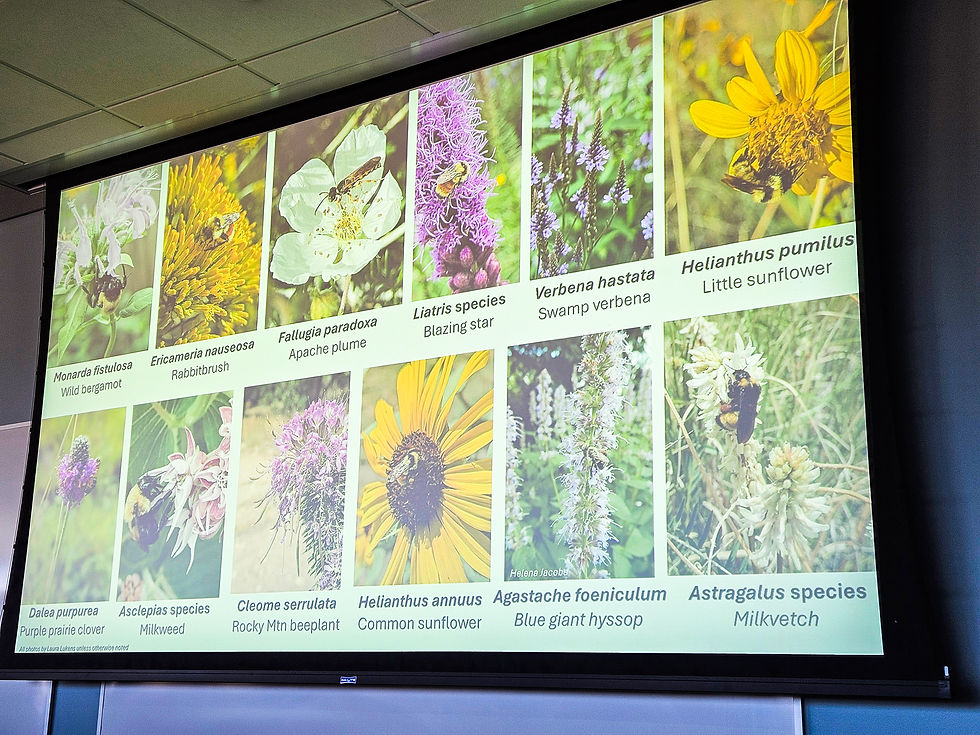
Laura Lukens, a PhD student in the Graduate Degree Program in Ecology at CSU, presented a wealth of information on helping bumble bees in our landscapes, both urban and natural areas. To summarize: More flowers & species = more bees & species. The flowers in her slide above are some of her top recommendations for supporting local bumble bees: Monarda fistulosa (Bergamot), Ericameria nauseosa (Rabbitbrush), Fallugia paradoxa (Apache plume), Liatris species, Verbena hastata, Helianthus pumilus (Little sunflower), Dalea purpurea (Purple prairie clover), Asclepias species (Milkweeds), Cleome serrulata (Rocky Mountain Beeplant), Helianthus annus (Common sunflower), Agastache foeniculum (Giant Hyssop), and Astragalus species (Milkvetch). She emphasized to never use weed barrier, which prevents bumble bees from nesting, as well as providing some bare soil, shelter like piles of sticks, and of course, avoiding pesticides.
Native Trees for Bees (and other Wildlife):
Derek Lowstuter, CSU Extension Specialist, educated us about the best trees for bees. They protect bees' flight from wind, provide shade and high forage density and seasonality. Many have extrafloral nectaries, serve as navigational landmarks, and protect bees from the cold, wind, and snow. He recommends Rocky Mountain Maple, Bigtooth Maple, Box elders, River Hawthorn, Large-thorned Hawthorn, Aspen, Cottonwood, and Salix/Willow Peachleaf or Pacific Willows. He also mentioned shrubs including American Plum, Chokecherry, Sand Cherry, Smooth & Three-leaf Sumac, Serviceberries, Red Osier Dogwood, Red Elderberry, Viburnums such as Squashberry, Mooseberry, and Highbush cranberry.
Growing Native Plants for Restoration
Dr. Maggie Gaddis, executive director of the Colorado Native Plant Society covered restoration of open spaces, transplanting natives, and restoring seedbanks. All in all, planting in the fall seems to be most successful for survival rates of many native plants. Read more about Gaddis' restoration and citizen science projects here: maggiegaddis.wordpress.com/maggie-gaddis
Other presentations included:
From Lawn Replacements to Naturalistic Prairies: Ideas for Incorporating Native Grasses in Colorado Landscapes Catherine Moravec and Lisa Pace, Colorado Springs Utilities
Native Trees and Shrubs of Colorado Dr. Jennifer Bousselot, Colorado State University
Cultivating Native Seed Availability Lyss Goldpenny, Denver Botanic Gardens
Missed the conference?
You can purchase & watch the recordings for $30 at: landscapingwithcoloradonativeplants.org