November 2026 E-Magazine

The balmy Front Range fall weather continues without the usual Halloween storm this year. We haven’t had a freeze yet. Fortunately, the mountains are getting snow. Lise Neer, our print magazine Art Director for many years, moved to Pagosa Springs several years ago, where she and her husband built a beautiful, sustainable house, fortunately, on top of a hill. Unlike many, they are safe as the San Juan River churns through again and again flooding the town.
I’ve been holding my breath, awaiting the midterm results, wondering if we’ll be able to check the worst impulses of those who ignore Climate Change, auction off our treasured public lands instead of investing in renewables, and well, you know, all the rest.

In this issue I’m including an article on Supporting Trees in Colorado by Mikl Brawner. Coming from the East Coast woodlands, it was a revelation when it was pointed out to me many years ago that only three trees are native to the Colorado plains: Box Elder, Willow, and Cottonwood - all growing in riparian areas. The rest, and all the urban canopies, were planted. Our trees don’t have it easy, but the valuable shade, cooling, food, and habitat they now provide will only become increasingly important in this era of warming and climate change.

Lifelong gardener Marilyn Raff writes about what she likes in her fall garden and Idelle Fisher, our web designer, persuaded me to run another piece about garlic for beginners because she finds she never has enough.
I have made the decision to retire at the end of this year so our November and December e-magazines will be our last. The website will remain active at least through January so check out our content on the Articles and Q&A pages. Winter is a great time for garden reading. You can find lots of gardening information on the internet, but how much of it is accurate? Check sources and trust your local, regional, experienced gardeners and professionals more than everything you read online.


A terrific new (April 2026) book of special note is The Rocky Mountain Native Plant Primer: 225 plants for an earth-friendly garden by Lauren Springer and Bryan Fischer. (The one gardening book that I wrote, Organic Gardener’s Companion, Growing Vegetables in the West, published by Fulcrum Books in 2012, was copied by Anthropic and, along with so many others, is now part of a class action suit/settlement, though I have yet to hear about the outcome.)
You can look forward to some great articles in our final e-magazine at the beginning of December. In the meantime, enjoy this extended fall and let’s help our SW Colorado neighbors however we can.

- Jane Shellenberger

Come November I’m often weary of gardening and looking forward to a break, but I’m also glad to walk slowly, observe plants more closely, notice what worked or didn’t please me. Cool weather feels welcoming with an occasional burst of much warmer days.
Some people clean and tidy up their gardens in fall, gather up leaves, trim plants, make areas look presentable and neat. But that’s not my approach for several reasons. I may come across a plant that needs quite a bit of cleanup, which I’ll do right then. For a rock garden plant I might fill around it with soil and top with pea gravel. But mostly, I leave plants alone this time of year. I like to see an occasional flower, like a dianthus or a new late lavender bloom, burst forth and surprise me. I want to let the imperfect, messy landscape remain for birds to hide as they fill up for winter, nibbling on seeds, leaves, and hips, and eating bugs. The extra foliage, even if brown, also helps many plants better survive over winter.


Trees do a lot for us so we shouldn’t forget to give them some support. When I look at the treeless 10-acre lot next to our nursery, or see an old photo of the CU campus with bare land around Old Main at CU Boulder, I remember why we can’t take trees for granted in Colorado. Trees really have it hard here in the Steppes, but there are things we can do to help them survive and thrive.
To begin, we must choose varieties that like Colorado conditions. The CSU website has a valuable downloadable resource to help us: The Front Range Tree Recommendation List. Local experts evaluated 250 trees, rating them from A to D based on their success.
Just because you see stunning photos or have fond memories of Pin Oaks, Red Maples, and Bradford Pears doesn’t mean they will thrive in our alkaline soils, violent temperature swings, and the worst fireblight in the country. For example: never plant an apple or pear that is not resistant to fireblight. A Radiant Crab is rated “A”, a Royalty Crab “D” because of fireblight. Our alkaline soils make certain nutrients, like iron, less available, resulting in weakened trees of some varieties.

I love garlic and grow it casually in my gardens, but I should get more serious about it. Garlic is very easy to grow in Colorado. My friend gave me some hardneck garlic bulbs many years ago from her patch in her Park Hill, Denver garden. (She thought it was decorative grass for over a decade before realizing it was garlic.) I eagerly took some bulbs and scapes and went to work planting them around in my perennial flower beds and edges of vegetable beds. They have taken quite well. In fact, hardneck garlic spreads around readily, especially if you let the scapes mature to produce bulbils.
If I was better about saving and separating some of the bulbs and bulbils and planting them every fall with proper space, they would produce bigger bulb heads, but I freestyle it so I get bulbs of all sizes.
By Keith Funk – The Garden Wise Guy, gardenwiseguy.com
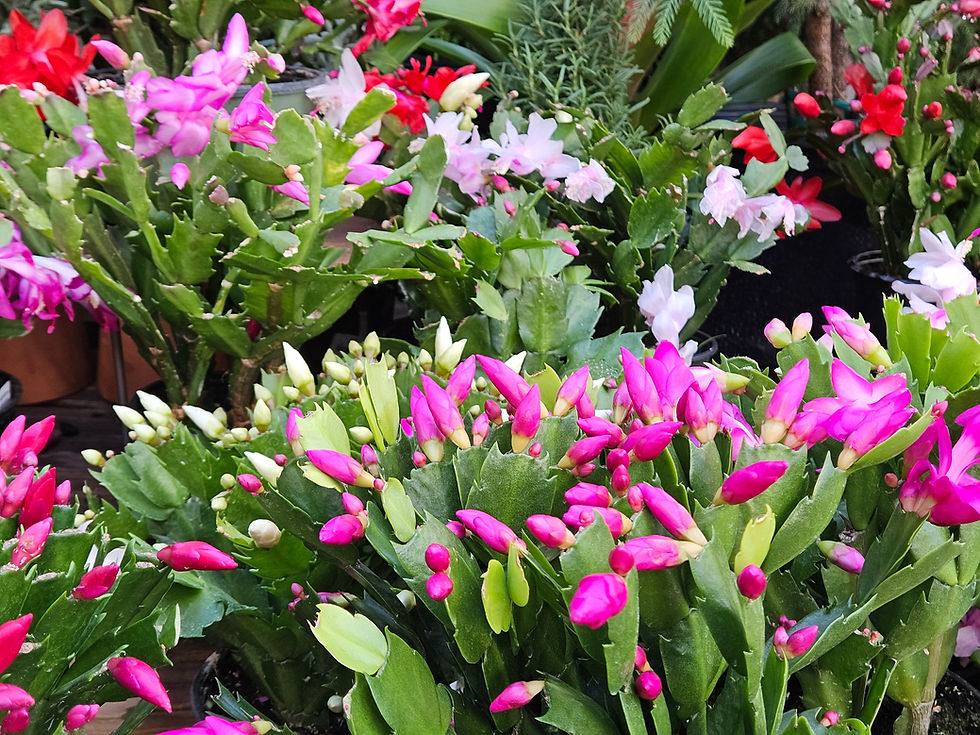
Q: What’s the difference between Thanksgiving and Christmas cactus?
A: They look remarkably similar, but there are a few easy ways to tell them apart!

Look at the leaves. Well, technically, those flattened green sections are stem segments, not leaves!
Thanksgiving cactus (Schlumbergera truncata): Look for pointed, claw-like projections along the edges of the stem segments giving the plant a jagged appearance.
Christmas cactus (Schlumbergera × buckleyi): Its stem segments have smoother, more rounded edges, without the sharp, claw-like points.
Many plants sold as Christmas cacti are actually Thanksgiving cacti. Growers bring them into bloom earlier for the holiday shopping season. Both are easy-to-grow houseplants that can brighten your home for years. Give them bright, indirect light, well-drained potting mix, and careful watering. With the right conditions, these holiday favorites may reward you with a spectacular display of blooms year after year.

More Gardening Q&As...

Gardening Events
Check our Colorado Gardener Calendar for our list of events including plant swaps, gardening classes, webinars, garden tours, plant sales, and conferences.
Coming up:
Denver Botanic Gardens:
Fearless Shrub Pruning
Nov 7, 10am-12pm:Learn when and how to prune deciduous and evergreen shrubs for long-term plant health and appearance.
Front Range Wild Ones:
Getting Started / Best Plants! Webinar with Ayn Schmit Nov 12, 6:30pm-8pm: A public Wild Ones program focused on getting started with native-plant gardening and choosing strong plant options for Front Range landscapes.
Do you have a Colorado Gardening class or event to submit to us? Fill out our form »