The Sting of Summer

By Eric R. Eaton:
On a scale of zero to four, zero being barely perceptible and four being agonizing, how would you rate Colorado's stinging insects? Before you answer, or worse yet begin experimenting, consider that one scientist has already endured many a self-inflicted wound to create the Schmidt Sting Pain Index.
Dr. Justin Schmidt is a curious and independent scientist. The media makes him out to be a playful masochist, a poster child for "don't try this at home," and an eccentric. The reality is an intelligent man who asks questions that escape the minds of others, and then formulates unique ways to test his hypotheses. Schmidt concluded the only fair way to test the intensity of insect stings was to experience them himself. His colorful prose, and humorous comparisons to ridiculous scenarios used to describe stings, adds to his acclaim. The lower end of his scale evokes wine-tasting. For example, this "1" rating of the sting of a sweat bee, genus Lasioglossum:
"Light and ephemeral, almost fruity. A tiny spark has singed a single hair on your arm."
We have many species of sweat bees in Colorado, so it is nice to know they don't pack much of a punch.

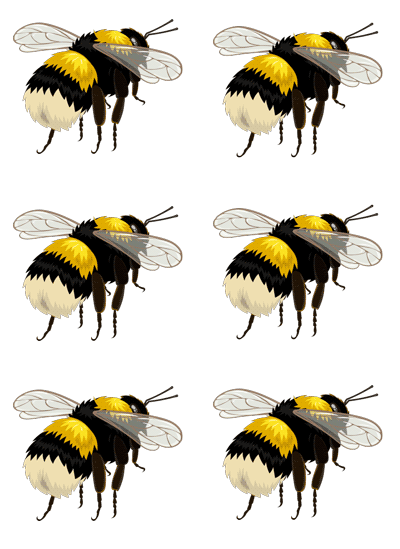
Bumble bees, those social, endearingly fuzzy pollinators in the genus Bombus, rate a "2":
"Colorful flames. Fireworks land on your arm."

The Western Honey Bee, Apis mellifera, can sting only once. The stinger is barbed, and so once implanted in your limb, it stays there. The bee flees, but vital internal organs are torn from its body. She will die. The disembodied venom gland continues to pump its poison into the wound. You would think this would be excruciating, but it manages "only" a "2."
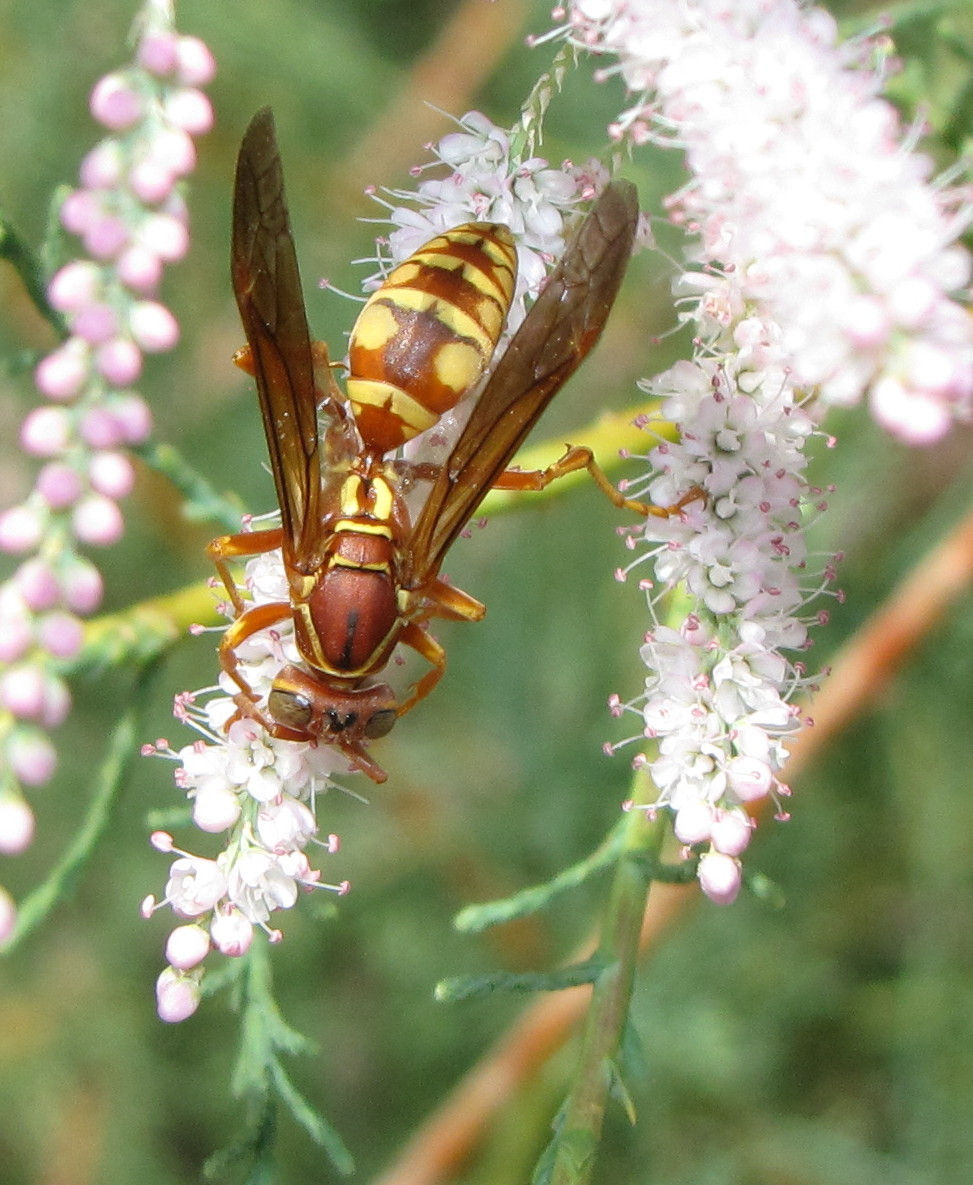
Wasps, sleek and shiny cousins to bees, have an undeserved reputation for hostility. Truly unprovoked stings are rare. Social paper wasps and yellowjackets are protecting large numbers of helpless eggs, larvae, and pupae inside their nests, so they aggressively defend their homes. While our Western Yellowjacket, Vespula pensylvanica, rates a "2," the Golden Paper Wasp, Polistes aurifer, gets a "2.5":
"Sharp, piercing, and immediate. You know what cattle feel when they are branded."
Polistes nests typically have fewer than 100 occupants, so what they lack in numbers they make up for in voltage per sting. Yellowjacket nests can house an average of 1,800 workers.
Like bees, most wasp species are solitary, each female creating her own nest, and rarely defending it. Why, then, are their stings so heinous? Our champion "hum-stinger" is the tarantula hawk, a gargantuan iridescent blue, orange-winged wasp in the genus Pepsis. It rates a full-blown "4":

"Blinding, fierce, shockingly electric. A running hair dryer has just been dropped into your bubble bath."
Most "advanced" species of ants bite and spray formic acid from the tip of their abdomen; but "primitive" ants have stingers and are not afraid to use them. In Colorado, harvester ants, genus Pogonomyrmex, rate a "3" on the pain scale:
"Bold and unrelenting. Somebody is using a power drill to excavate your ingrown toenail." - P. badius, the Florida Harvester Ant.

"After eight unrelenting hours of drilling into that ingrown toenail, you find the drill is wedged in the toe." - P. maricopa, the Maricopa Harvester Ant, a Colorado species.
Only female ants, bees, and wasps can sting. The stinger is a modified egg-laying organ called an ovipositor. It has become "weaponized" over eons, used mostly for paralyzing or killing prey. Only bees use their stings solely for self-defense.
The Schmidt Sting Pain Index applies to average, healthy human beings, and represents a single sting incident. People with compromised or hypersensitive immune systems, the very young, the elderly, and those enduring multiple stings, can suffer a much different experience, if not a life-threatening event. Consult your physician to determine if you or other family members are allergic to insect venoms. Meanwhile, try to avoid stings:
Watch out for nests of social wasps in birdhouses, overturned flower pots, and other concealed locations. Do not reach where you cannot see.
Inspect your yard for ant, bee, or wasp nests before running equipment.
Never serve canned beverages outdoors lest a wasp crawl inside unseen.
Get a professional bee-removal service if you must destroy a nest of social wasps.

Schmidt restricts his Sting Pain Scale to ants, bees, and wasps, but we also have stinging caterpillars in Colorado. The IO Moth, Automeris io, is studded with branching, venomous spines in its larva stage. So are caterpillars of buck moths and the Sheep Moth, genus Hemileuca.
Ready to enjoy the outdoors now? Fear not, but respect our stinging insects. Remember that bees are important pollinators, and ants and wasps kill pest insects that are more damaging to our health and livelihoods than the stinging critters dispatching them.
Eric R. Eaton is principal author of the Kaufman Field Guide to Insects of North America and many other books including, Insectpedia, Wasps: The Astonishing Diversity of a Misunderstood Insect, and Bugwatching: The Art, Joy, and Importance of Observing Insects. He writes the blog “Bug Eric” (bugeric.blogspot.com)