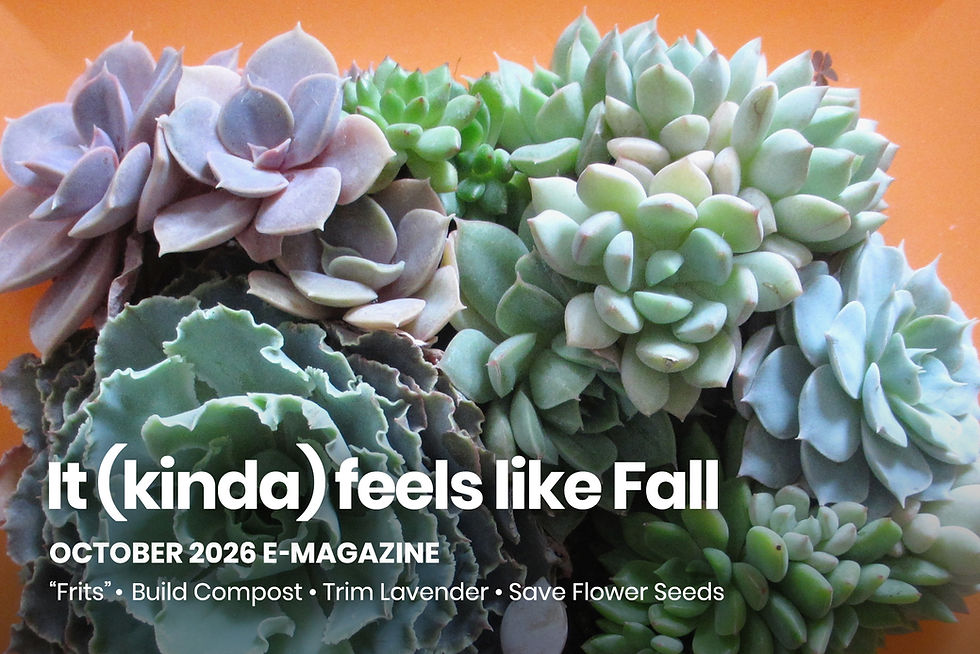
October 2026 E-Magazine

I certainly have had one of the most fun and life-long learning-filled “careers” putting together this magazine for so many years. And while all-digital isn’t quite as varied and fun for me as the print was, it’s a fraction of the work and the cost.
Readers often thank me for carrying on, but surely there must be a somewhat literary, younger, well-rounded plant person or two (or more) who doesn’t mind gathering some advertising who would be interested in carrying on from here? I’d love to hear from you.
Today I got some hay from a local farmer who told me his harvest was half of what he usually gets and though more rain and/or snow are in the winter forecast, it’s going to take a lot to rejuvenate the ground. The hay is coarser than usual, without a lot of blade on it. Likewise, what’s left of my back yard that surrounds small islands of gardens and trees is dry and dusty, I never water it but, of course, this year has been exceptionally dry.
It’s a perfect opportunity to create gravel paths and, for the ambitious, more beds, not having to battle the turf. And it’s not a bad aesthetic if you overlook the chicken wire fencing to keep the rabbits out. They’ve managed to infiltrate most of the charming black metal ornamental garden fencing I’ve accumulated over the years but, being dogless, we’re in an extreme rabbit situation. The corner of our pasture abuts Open Space but we have just a few - very few - predators out here anymore. Coyotes yipping at night, an occasional bobcat or lion passing through. The great horned owls finally showed up late, but there are many fewer hawks and rarely, maybe just in winter, an eagle or two, ever since the flight schools operating at Longmont’s airport began buzzing around endlessly, invading the airspace.
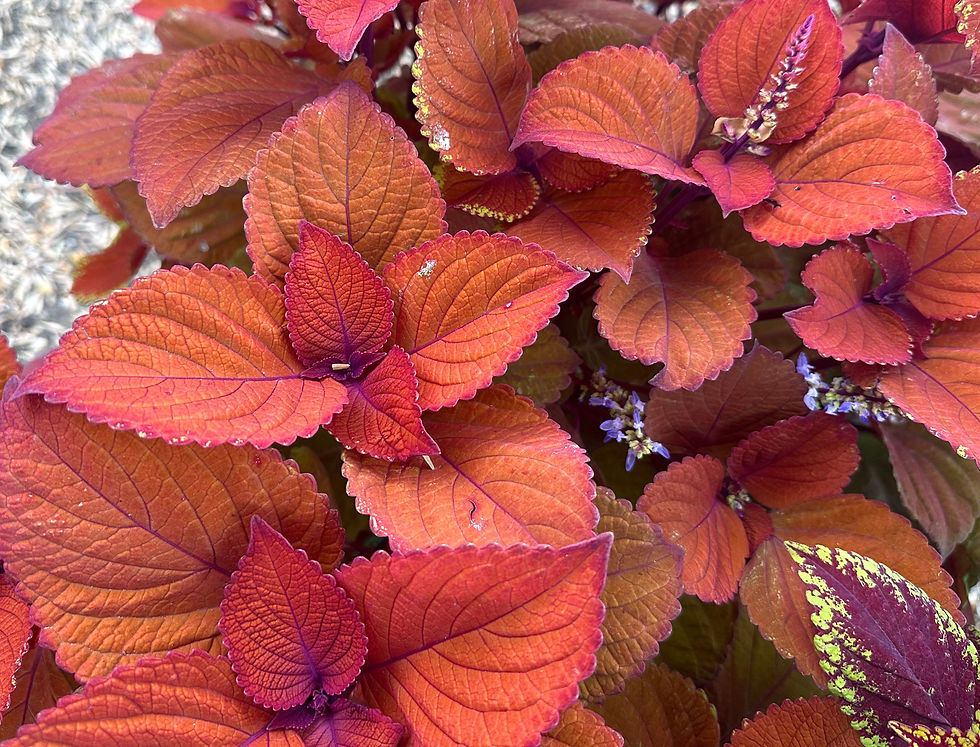
The rabbits spared a few blossoms so the impressive and so far still green Guyanan pumpkins are getting bigger. The lemon cucumbers keep cranking out. My ‘Campfire’ Mexican coleus is still the glowy WOW! of the season, though my photo does not quite capture the purple veins and undertone from the underside of the leaf.
Since it’s bulb planting time, we have a piece by the great plantperson (among other things) Bob Nold, writer of “The Miserable Gardener” blog, on Fritillarias. And since it’s time to build up the compost with all your leftover garden stalks and things, I’m including a piece on Compost Bugs by the entertaining entomologist-writer, Eric R Eaton.

Enjoy!
Jane Shellenberger


Fritillaria is a genus of over one hundred species distributed throughout the Northern Hemisphere. Common name, fritillary. If you are totally cool like me you call them “frits”.
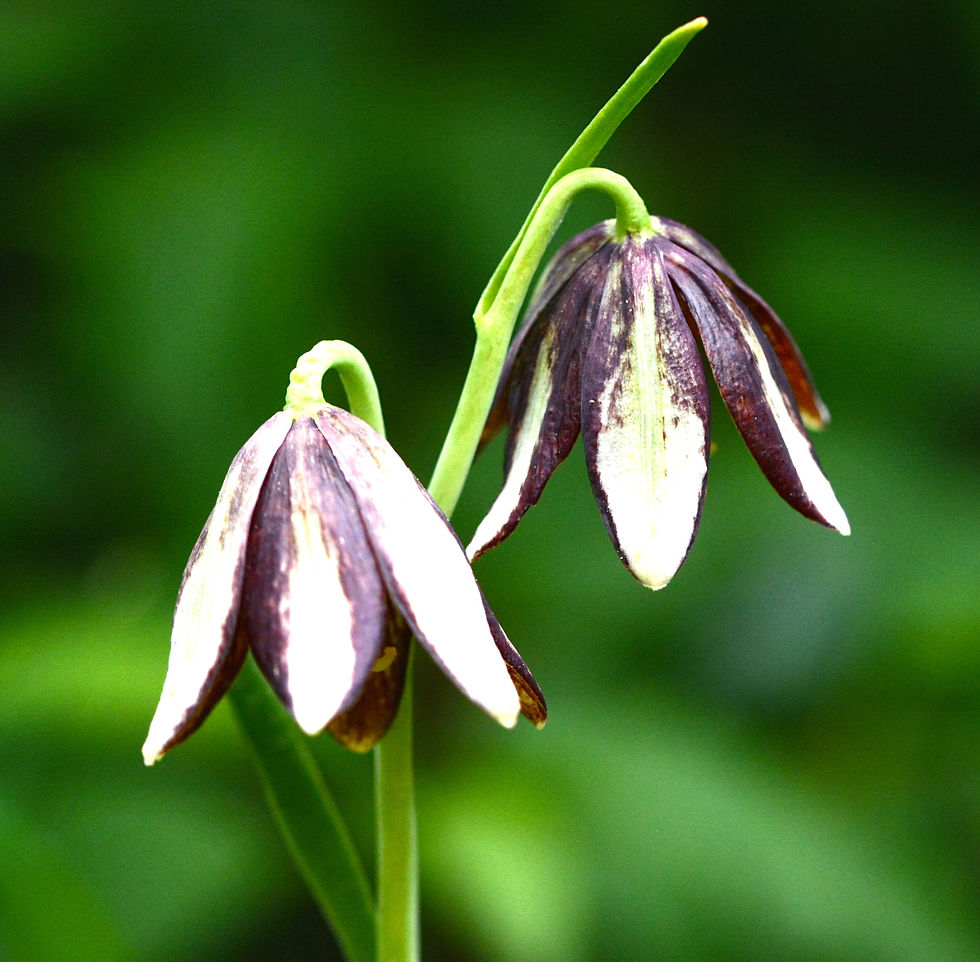
The generic name comes from the Latin word for “dice box”, a box that, I guess, held dice. This may seem like an odd name until you look at the snakeshead fritillary (Fritillaria meleagris) with its checkered patterns on the outside of the flower.
Let’s start with that one, since it’s easy to find. It’s easy to grow in a location where the soil does not dry out much. In fact, a wet meadow would be ideal. I’ve lost some of mine over the years due to excessive dryness. The typical color is a sort of dusky purple, on a plant about a foot tall; there’s also a beautiful white, and several named varieties which you can get from specialist nurseries.

Earthworms are acclaimed composters, but having insect activity in your compost is a good thing, too. It means you have a healthy mini-ecosystem that includes decomposers that break down decaying organic matter into nutrient-rich natural fertilizer. Thus, the vegetable scraps from this year's harvest feed next season's crops. Let's explore this realm with a magnifier and microscope. Prepare to be amazed.
"Mite-y" Abundant
Your compost is teeming with mites, perhaps the most numerous and diverse arthropods in all soil ecosystems. They are arachnids related to spiders, scorpions and harvestmen. Mites in soil and compost have a collective appetite for decaying plant matter, bacteria, yeast, algae, and fungi. Others are predatory or parasitic on small invertebrates. Oribatid mites, also known as moss or beetle mites, have dark, shiny, helmet-like exoskeletons. Mesostigmatid and prostigmatid mites are pale, softer-bodied, and appear similar to each other, except for the placement of their breathing holes: along the sides of the body in the order Mesostigmata, and at the base of the mouthparts in suborder Prostigmata.

By Keith Funk – The Garden Wise Guy, gardenwiseguy.com
Q: Can I save flower seeds from my own garden and should I let some flowers reseed themselves?
A: Absolutely! Saving flower seed is one of the easiest ways to get more flowers without spending more money. And some flowers are perfectly happy to do the work themselves. I call these Garden Gypsies—flowers that drop their seeds and show up again next year wherever they happen to land.
If you want to collect the seed yourself, don’t rush it. Let the flower finish blooming and allow the seed head to mature on the plant until fully developed - generally dry, brown, tan, or black rather than green.
On a dry day, cut off the dried flower heads from the strongest plants, and put them in a paper bag or envelope. Shake or rub the flower heads gently to release the seeds. Remove the larger pieces of dried flower material, but don't worry about removing every bit of chaff. You're saving seed for your garden—not entering a seed-cleaning contest.
Let seeds dry thoroughly before storing. Then put them in a labeled paper envelope and keep somewhere cool, dark, and dry. Label those envelopes!
One thing to remember: saved seed doesn't always produce an exact copy of the parent plant. Open-pollinated flowers are more likely to resemble the parent, but bees may have cross-pollinated your plants with another variety. Hybrid flowers can be even more unpredictable. That's not necessarily a bad thing—you may get some interesting surprises.
Instead of collecting all the seed, let a few flowers mature and drop their seeds right where they are. Or spread them into new areas. Next spring, you may discover little seedlings popping up in unexpected places. That's part of the fun.
More Gardening Q&As...

Gardening Events
Check our Colorado Gardener Calendar for our list of events including plant swaps, gardening classes, webinars, garden tours, plant sales, and conferences.
Coming up:
Tagawa Gardens, Centennial:
African Violet Fall Sale – with Rocky Mountain African Violet Council
Oct 3, 9am-1pmChoose from the best blooming African Violets you’ll find anywhere around!
Fort Collins Nursery:
Nursery Pot Recycling Day
Oct 3-4, 9am-5pm
Bring clean plastic nursery pots for Fort Collins Nursery’s monthly recycling weekend.
Do you have a Colorado Gardening class or event to submit to us? Fill out our form »